Skip to content
rememory Shivanjani Lal

Publié le 27/05/2026

REMEMORY

Le Grand Tour wanders from biennial to biennial, from experiences to installations, from interviews to conversations. Connections are forged, discussions arise and continue. This is what we seek, what moves us, what broadens our perspective and our thoughts. 
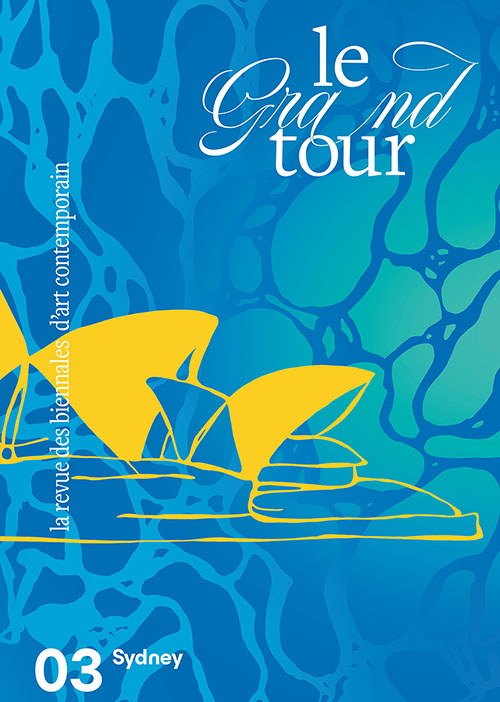
From the Cité internationale des arts in Paris to the Sharjah and Sydney Biennales, we have maintained a long-standing, engaged conversation with Shivanjani Lal. Here, she offers us a glimpse into her Sydney—the city where she grew up, and where she now lives and works. She weaves together memories, experiences, and perspectives, and traces, through her own journey, how a relationship with art takes shape and transforms.

Sometimes I worry that all we do is forget.

That time moves only in a relationship to what we remember. That art only remembers what is directly in front of it. 

The slippage of memory loss feels so pertinent as we continue to live. 

The 2026 curatorial concept of the Biennale of Sydney, themed Rememory as a proposal, claims:

A means of revisiting, reconstructing, and reclaiming histories that have been erased or repressed, Rememory signifies the intersection of memory and history, where recollection becomes an act of reassembling fragments of the past—whether personal, familial, or collective.”

Since 1985, my memories of Sydney have been shaped by a desire to get to know it through both making and living in a city alive with multiple art histories. I don’t have memories of the Biennale of Sydney as a child, even though I have lived here most of my life. Even though the biennial is the third oldest in the world, showing art in Sydney since 1973. The first in the Asia Pacific to do this. Sometimes I think we forget this history and the significance of holding dedicated time to contemporary art and its ideas.

Memory before place before memory before place before memory before place before memory

This may not seem like that long, considering that one of the foundations of Australian contemporary artistic practice also incorporates a living history of Indigenous art that stretches across 60,000 years of living. The first galleries in Australia were not the institutions but the caves that held the stories of Bediagal, Birrabirragal, Borogegal, Boromedegal, Buruberongal, Darramurragal, Gadigal, Gahbrogal, Gamaragal, Gameygal, Gannemegal, Garigal, Gayamaygal, Gweagal, Wallumedegal, and Wangal peoples¹. How can we speak to histories of mapping without thinking about the boundaries held by these communities and the lived and living experiences of their founders?

I grew up on the lands of the Wangal and Wategoro clans of the Dharug language nation; they held and sustained me as I grew a practice on these lands. 

Gadigal has held the Biennale of Sydney since its inception. 

¹See Aboriginal Heritage Office website, [https://www.aboriginalheritage.org/history/clans-of-sydney/]. 

Before I begin, where do I come from, what did I see first, what comes first?

It is easy to begin from where I am: Lidcombe, Sydney, a suburb on the cusp, not cool enough to be Inner West, a pedestrian and suburban place. When I was a child, art was what I drew, what I created, what my sister did and the photographs my dad took. My family is not made up of artists, but these creative outlets are important reminders of how observing can nurture creative ideals. 

The external art world only impacted me once. When I was a child, there was a school excursion to the city, and as a kid who grew up in Western Sydney, this trip was the first time outside of my life with my parents that took me to a place where I would eventually end up working. The excursion took us to the Museum of Contemporary Art (MCA). I was 9. I remember seeing a giant puppy shaped from many small plants. Later, I would realize that this work was by Jeff Koons, as part of Kaldor Public Art Projects, a series of public art interventions that have been occurring across Sydney since 1969. These projects invited artists from all over the world to intervene in Sydney through contemporary art. 

When I think about things that have shaped the Australian art world, Kaldor Public Art Projects comes to my mind. It started before the Biennale of Sydney and shaped an engagement with a public that can’t be ignored. Jeanne-Claude and Christo’s Wrapped Coast™️ is a significant moment in the artworld. One that was daring, that changed the history of these two artists as well as the landscape of art as we knew it in Australia. As it moved beyond the contained Western structures and constraints of the institution, this project reminds us of what returning to nature does for the body and the mind; what site responsive works can create; and how they foster dialogue with their environment.

I can’t talk about Kaldor Public Arts Projects without talking about barrangal dyara (skin and bones) by Wiradjuri and Kamilaroi artist Jonathan Jones. This work, which celebrated the 32nd Kaldor Public Art Project, was conceived as a memorial to a bygone colonial building that housed Indigenous artefacts of Southeast Australia. This building was lost to fire in 1882. barrangal dyara (skin and bones) used Indigenous white shields and language to restore and revitalize the legacy of these artefacts, in a way that spoke to the power of regeneration. I remember witnessing this work and feeling so moved as I heard the laughter of children learning and the voices of elders singing as I walked through the outline of a long-departed building. For me, this work was about how nature and language contained the seeds for rejuvenation—not of artefacts in a building—, but of relationships, and how joy could and can be held on by these encounters.

What grew here? What grows here?

Within this small stretch of time (1985 to now), so much living could happen, and worlds could be built. During this time, institutions that didn’t exist came into being, and have also disappeared. Artspace, Museum of Contemporary Art, Casula Powerhouse—now known as Liverpool Powerhouse—, Peacock Gallery, Granville Arts Centre, Blacktown Arts Centre, Campbelltown Arts Centre, and Carriageworks are significant arts organizations that now exist and are part of the conversations that occur during the biennial. Along with sites and sister events such as Cockatoo Island and SafARI, as well as counter programming like The National, these places nourish an ecosystem that is fed by the biennial and grows in the interim years, thus creating places of gathering, fostering pivotal conversations and communities.

I think part of the reason I am bringing up this ecosystem is that the biennial is as much about growing into place as it is about art. I think about a work I regularly see in front of the Sydney Opera House: Jimmie Durham’s Still Life With Stone and Car, made for the 2004 edition, but now a fixture of the Walsh Bay Performing Arts Precinct. A strange artwork that people drive past is preceded by a sign that tells you “Artwork Ahead,” which is, in fact, another artwork. It is so easy to believe that an accident has occurred, but this artwork exists to remind us of the fragility of monument making. There are other moments that began with the biennial and coloured the city in ways that over time become forgotten. Yet they remind us of times gone by and times to come.

Returns, Returning, Dissolves, Dissolving

I came back to Sydney in 2014, ostensibly to begin a career in Sydney after living in Melbourne for many years. The return to this city was seeded by regular visits that made me believe that exciting things were happening there, that the distance between me and the “big things of art-making” were easier to bridge in Sydney than they were in Melbourne, and that the distance between institutions felts more like steppingstones than impossible leaps.

An institution now dissolved to time is that of SafARI, a counter program of exhibitions that highlighted emerging and unrepresented Australian artists exhibited in Artist Run Institutions (ARI’s), like Kudos Gallery, Alaska Projects and MOP Projects (all spaces that are no longer with us). SafARI began in 2004 and became an informal fringe of the Biennale of Sydney over time. Its events dissolved into the ether in 2016. For a time, they enabled conversations that were not part of the mainstream that the biennial represents but also attempted to show the global world what Sydney and Australia could offer, in terms of experimental and emergent practices. What other possibilities could exist in these streets. Often in biennials, the spaces become institutionalized and so the fringe never get seen. With SafARI, there had been an attempt to create a place to see it. One of the last SafARI curators has become the future of Australian art: Liz Nowell became the Director of Adelaide Contemporary Experimental (ACE), before she joined the Institute of Modern Art (IMA), and now Arts Projects Australia. Indigenous artist and curator Tony Albert was appointed the inaugural Fondation Cartier pour l’art contemporain First Nations Curatorial Fellow, along with the Artistic Director of the 5th National Indigenous Art Triennial, After the Rain. The foundations of Australian arts leadership begin in the periphery before entering the centre. 

Holding Land, Holding Ghosts, Holding Ancestors

Over its history, the biennial also offered artists opportunities to show their work in non-traditional spaces, such as Cockatoo Island, Pier 2/3 in Walsh Bay, Barangaroo and places within The Rocks. My favorite was Cockatoo Island, a site with both colonial and industrial heritage that offered spaces filled with history, which sometimes overwhelmed the works, but, at other times, provided a scale that allowed and encouraged ambition. 

Among works that challenged the history of the site:

Aleks Danko’s Cultural Meditations comes to my mind. It was part of the 17th Biennale of Sydney The Beauty of Distance: Songs of Survival in a Precarious Age (2010). I remember witnessing this work on Cockatoo Island: a series of Ukrainian embroidery that spoke to personal parental loss as well as an attempt at holding on to history through material making. I remember walking through the exhibition and feeling so overwhelmed by how much work surrounded me. I eventually found Aleks Danko’s work in a quiet cottage to be a balm that slowed time, and spoke of love, materiality, and holding on, while people and knowledge slipped away.

There’s also Nicholas Galanin’s work at the 22nd Biennale of Sydney. Shadow on the Land, an excavation and bush burial was an excavation of the shadow cast by the Captain Cook statue in Sydney’s Hyde Park. A work that required to be viewed from above and challenged perception as on the ground, the form of the work couldn’t be revealed. Using the language of archaeology to subvert expectations, Galanin’s work asked us to dig up the past to consider new possibilities for the future.

Gina Athena Ulysse’s An Equitable Human Assertion, Rasanblaj began as a performance that transformed into a sound installation, both haunting and haunted. Utilizing a site of colonial architecture ruin filled with voices of colonized bodies, the work was an effective way to consider the narratives of those who have disappeared from history but persist through language. This work reminded me of the importance of holding on to language, of how oral histories contain so much more than we give them credit for, and how both sharing and listening to the voice are equal acts of remembrance.

These sites and these relationships have become pivotal in creating histories that challenge perceptions of land ownership and who tells the stories. That land holds stories and that these stories can be revealed by the right storyteller.

Where would I be without my elders?

For most of my life, seeing myself and my community did not feel possible. There are works by artists in adjacent communities that I looked to as guidelines for how to grow my practice, but it was not until 2019 that it changed when Marama Dina, an exhibition of Fijian women artists, occurred. This exhibition was an intergenerational conversation between Fijian artists living and working in Aotearoa and Australia, led by The Veiqia project, which looked at the loss of Veiqia (Indigenous female tattooing practice) and its impact on the lived experience of Fijian communities. The exhibition included works by Margaret Aull, Torika Bolatagici, Donita Vatuinaruku Hulme, Yasbelle Kerkow, Joana Monolagi, Dulcie Stewart, Salote Tawale, Luisa Tora, MC Trey aka Thelma Thomas, and Emele Ugavule. It was the first time I saw people from my community hold space in a profound way. The exhibition had a vale ni soqo (village meeting house) made by Salote Tawale, and this place became a gathering space for all kinds of conversations. This exhibition reminded me of the importance of seeing yourself in space and the vitality of having cross-generational conversations. 

Women Seen, at the Margaret Whitlam Galleries (Western Sydney University’s campus gallery)—an exhibition I was involved in—, attempted to look at the alumni, staff and artists connected to the University of Western Sydney Visual Arts School that existed between 1986 and 2009. This exhibition was a tentative at looking for elders, some of whom are still practising, but also artists who only made it through their graduation. It was important for me to see what the foundations of art looked like in the place I am from, and to acknowledge these people and name them, which contribute to reframing what we think of as Australian art.

Rememory as Muscle Memory

When I think about Sydney, I think about all the places that exist and shape me both as a person and as an artist. Sharing these moments of both place and art is about acknowledging the history of community that I am part of, and that I also contribute to. The act of writing is also the act of remembering, and that remembering is an active living thing that needs to be activated and shaped like muscle memory.

Shivanjani Lal