
Skip to content

Anthony

Gardner

Anthony Gardner

Anthony Gardner
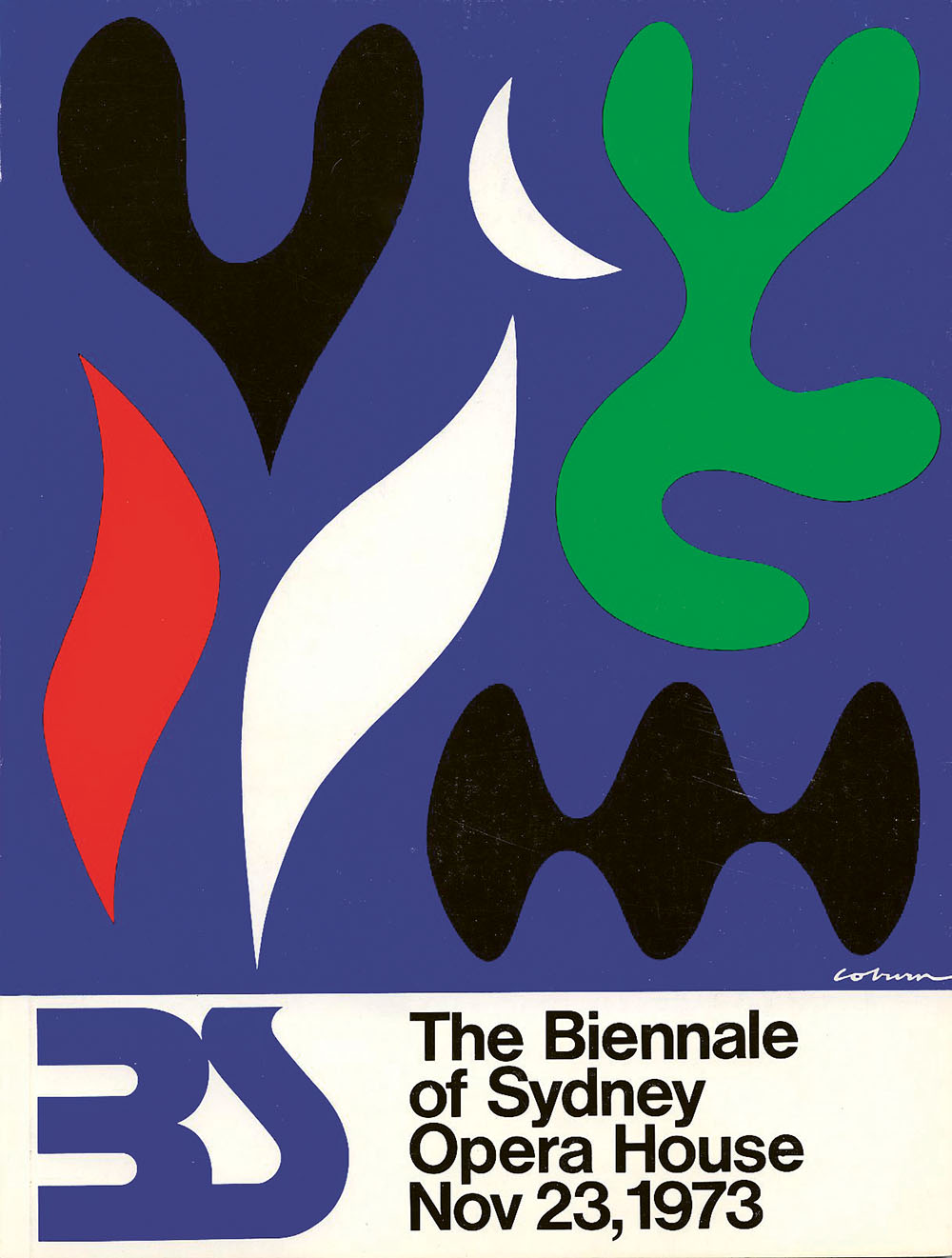
John Coburn, affiche pour l’édition inaugurale de la Biennale de Sydney, 23 novembre 1973 © Archives de la Biennale de Sydney.

Publié le 05/05/2026

Nouvelle vague
ou vague à l’âme ?

What a privilege it is to open this third issue with the words of Anthony Gardner, whose reflections have accompanied us since the magazine’s launch in 2023! A professor at Oxford University, working at the intersection of art history and political science, he is a major reference for us, and a guide to this biennial culture, which he examines in depth in a book co-authored with Charles Green in 2016. For Le Grand Tour, he explores the role played by the Australian capital—where he grew up—in the global cartography of contemporary art. Created in 1973, the Biennale of Sydney, like other initiatives launched at that time, broke away from the historical model of Venice to embrace what the authors describe as the “second wave.” 

Since its inception, the Biennale of Sydney has continually reinvented itself in light of the challenges it has faced. What is the situation today, as climate change and colonial resurgence demand to reconsider the way we consume contemporary art?
Le Grand Tour (LGT) : In 2016, you published Biennials, Triennials and documenta: The Exhibitions That Created Contemporary Art with Charles Green, in which you analyse the growth of the biennial model in contemporary art since the 1950s. What characterizes this phenomenon?

Anthony Gardner (AG) : After the creation of the first biennial in Venice in 1895, various initiatives attempted to follow this model in different parts of the world: Pittsburgh launched the Carnegie International in 1896, which was initially annual but later became biannual; the same is true with the Whitney Biennial in New York in 1932; or São Paulo, which organized its first major biennial in 1951—probably one of the first recognized as such after Venice. By the 1950s, however, many countries sought alternative ways of approaching international connections and nationalism, drawing inspiration from existing models while searching for new ones. This is what Charles Green and I have called the “second wave” of biennials, which spanned from the 1950s to the 1980s. Though they did not share clear-cut parameters, these countries viewed themselves as belonging to the Third World or the Non-aligned Movement. Many of them had gained independence from imperial and colonial powers. New nationalisms emerged, along with international networks that responded to the binary system of the Cold War, which pitted the capitalist First World—particularly the United States and Western Europe—against the communist Second World of the Soviet Union. From the 1950s onwards, the number of biennials began to increase in places such as Egypt, with the Alexandria Biennale (1955), soon followed by India’s First Triennial of Contemporary World Art (1968), the Arab Biennial in Iraq (1974), or the Havana Biennial, which started in 1984—probably the most famous of them. They were part of this reflection on difference and connection: difference in relation to global superpowers, and connection among these countries and cultures that were otherwise marginalized. By the time that European communism started to collapse, alongside the rapid spread of neoliberalism, a third wave emerged: the biennials of the 1990s.

LGT

What are the consequences of this “biennalization” phenomenon?

AG

There are several ways to answer this question. One could say that it has enabled important artistic centres that were previously marginalized by the North Atlantic region to gain recognition: this is the case for places such as New Delhi, Sydney, and Baghdad. But there are also some risks: do these meeting points manage to articulate connections, similarities, or differences? Or do they flatten out contextual singularities? These events are becoming more sprawling and responding to competition by investing in larger commissions. This has a snowball effect on the spectacular mode of art and exhibition making. It sometimes leads to what has been called vapour wave curating where anything goes within the framework of a broad concept that doesn’t hold up very well. Competition has always been a key element in many biennials—but not all of them. For instance, the Biennale of Sydney deliberately opposed the presence of national representation or award distinctions. The second wave is quite interesting in this regard, as a number of these events chose to remove prizes, as they believed that it pitted artists, cultures, and countries against each other in a rivalry similar to that imposed by the Cold War. It was a way of creating a more horizontal and egalitarian system of recognition of art. 

LGT

While the second and third waves of biennials broke away from the historical model of Venice, can we nevertheless trace a legacy, a continuity?

AG

In a sense, yes, there is continuity: Venice succeeded in establishing a model for bringing together artists from different countries and cultures through their art. The rise of biennials in the mid-twentieth century reflects this success, but also the desire to innovate by offering a large-scale international group exhibition format, which, in the late 1960s and 1970s, became thematic. It was at this point that themes began to emerge that are much more familiar to us now, such as Foreigners Everywhere; All the futures of the world, etc. One of the things that is perhaps quite striking about the second wave is also the tension between the public and private. Venice itself was a very public project, whereas São Paulo was much more of a private one, as it was led by Francisco Matarazzo Sobrinho with the support of the Rockefellers in New York. Something similar happened with Sydney: its founder, Franco Belgiorno-Nettis, was very explicit about his connection to his heritage (as an Italian immigrant to Australia) and considered Venice as a model for Sydney to take its place on the global art scene. 

LGT

The Biennale of Sydney was launched in 1973. What were its ambitions back then?

AG

When the Biennale of Sydney was created, its founder, Franco Belgiorno-Nettis, was running an organization called Transfield Projects, which had already set up an art prize in Sydney for local artists. In the late 1960s, Belgiorno-Nettis approached the Department of Foreign Affairs with the idea of creating a different exhibiting format, especially given that Australia had suffered from the “tyranny of distance” from so many other regions, particularly the North Atlantic, and therefore North America and Western Europe, but also, to a large extent, Asia and Africa. How to bridge that distance? For Belgiorno-Nettis, the answer was to follow the model of the biennial, which he finally did in 1973. This coincided with the opening of the Sydney Opera House, which hosted the first edition. A lot of artists from Australia as well as other parts of the world came together, but the exhibition was relatively small.

LGT

What about the subsequent editions?

AG

It was actually three years later that the second edition took place, under the direction of Tom McCullough, who brought together sculptors from Asia, Europe, North America and Australia. The third edition, curated by Nick Waterlow, was held in 1979. This biennial was entitled European Dialogue and explicitly excluded artists from North America: Waterlow was more interested in connecting artists from Australia with their peers in Western and Eastern Europe. Artists such as Tadeusz Kantor, for example, exhibited their works, which was quite unusual, as artists from communist Europe did not often exhibit in spaces that were not associated with these non-aligned second wave biennials.

LGT

What about the space given to local artists?

AG

In 1979, local artists expressed many concerns: a series of town hall meetings were held to determine whether enough Australian artists and women were represented at the biennial, as it already seemed that they were being excluded from the event. As a result, many of them created their own movements, arguments and publications, placing strong emphasis on different ways of understanding what “representation” could mean. I recommend reading Biennale of Sydney, White Elephant or Red Herring?, which is a wonderful book that traces some of the discussions that took place at these meetings, the letters that were written, the photographs and personal archives that were made public. From the outset, many concerns were raised about who was being shown and who the biennial was aimed at. This led to many shifts that began to emerge within the Biennale of Sydney in the 1970s, then in the 1980s and beyond.

LGT

What can be said about the evolution of this event since the 1980s?

AG

One of the most significant changes probably took place in the 1990s, when the biennial started to bring in international curators: René Block, from Germany (1990); Lynne Cooke, who grew up in Australia but had moved to New York by that time (1996); Jonathan Watkins, from the UK (1998), etc. There was a desire to build worldwide networks. Another very important turning point happened around 2014, when artists began to question the funding structure of the biennial. This stemmed from the legacy of institutional critique in the 1970s but came late to the biennial model in the 2010s. Major boycotts occurred in 2014 over the provenance of funds, particularly regarding the connections between the Biennale of Sydney, Transurban and the control of offshore detention centres for asylum seekers. This was a very important point of conflict within the biennial’s history. Changes were made within leadership; concerns were raised about the presentation of the works and whether they should be removed, veiled, covered or maintained. The biennial rebuilt itself after that. As the 2020s approached, it underwent several significant shifts, including developments and reflections on ecology and indigeneity, which have been crucial to the last three editions.

LGT

How has the biennial addressed issues relating to the representation of First Nations throughout its history?

AG

It was in 1979 that First Nations artists were first featured at the Biennale of Sydney. But it was not until 2020 that an Indigenous Australian artist was commissioned to lead the biennial, when Brook Andrew curated the 22nd edition under the title Nirin, which means “edge” in Wiradjuri. It is quite striking that it took forty-seven years for an Indigenous Australian artist and curator to be invited to lead the biennial. One of the most important aspects of this edition is that it had the support of First Nations curators and included First Nations members in the work team. This is a significant improvement, but I think there is still a lot to be done.

LGT

Going back to what you were saying earlier about the concerns raised in 1979, do you think that this biennial is aimed at a local audience today?

AG

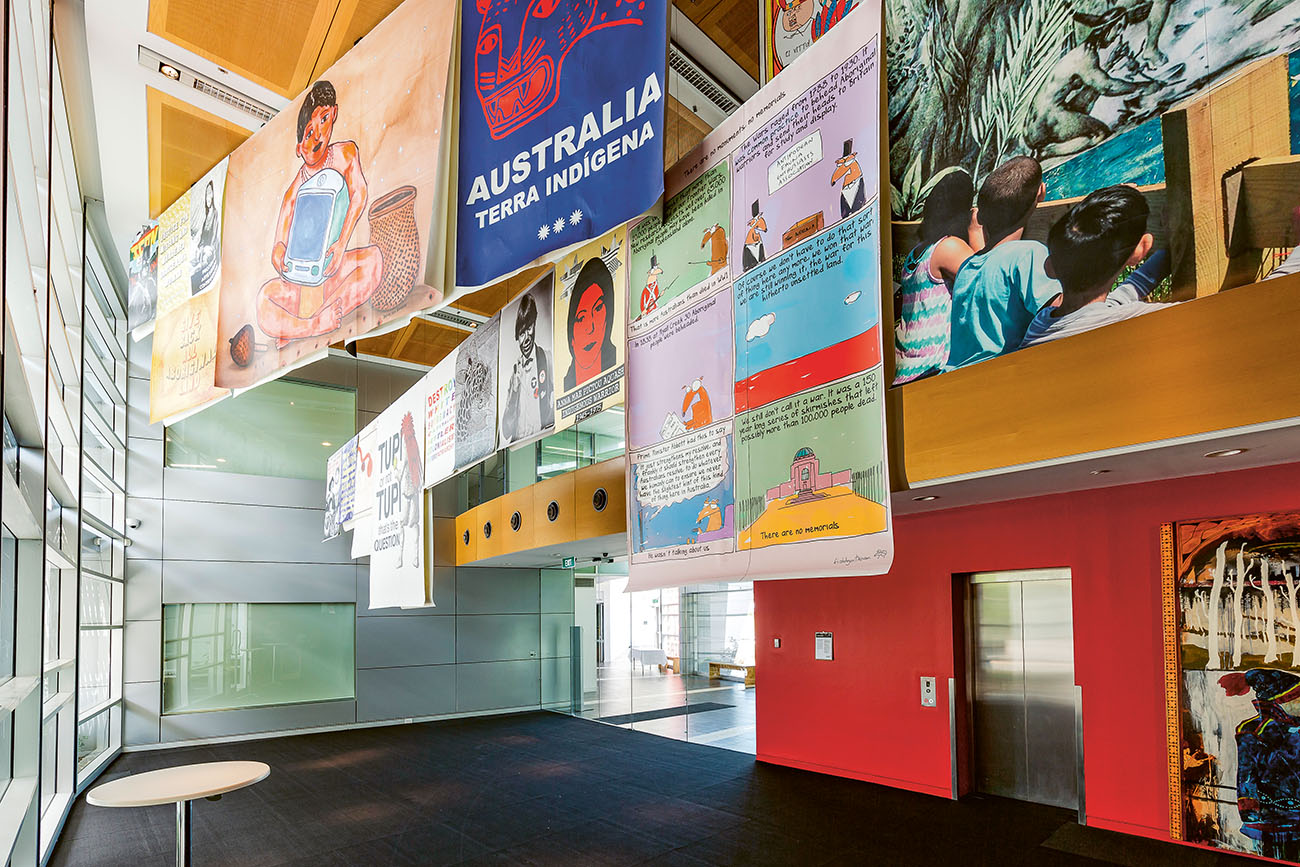
In my opinion, the Biennale of Sydney is really involved in the local scene. This is partly due to venues that deliberately engage with suburbs and communities—even those located an hour’s train ride from the city centre, such as the Campbelltown Art Centre. Not to mention that admission to the biennial was free of charge and still is. Although many people are still reluctant to visit galleries or museums, a lot of effort has been made to welcome them and let them know that these exhibitions are taking place.

LGT

Hoor Al-Qasimi has been appointed curator of this year’s edition. What can we expect from this new connection between Sharjah and Sydney?

AG

It is interesting to see how important Hoor Al-Qasimi has become to worldwide cultural networks, thanks to the opportunities she has provided through the Sharjah Art Foundation and her achievements in reinventing the Sharjah Biennial, which supports artists from Africa, Asia, the Caribbean and their diasporas. I think this has been a game changer for global contemporary art. I am optimistic about what she can bring to the Biennale of Sydney, and I am eager to see how Sydney will respond to the works of artists that many people in Australia may not know or have never encountered before.

LGT

What place does the Biennale of Sydney occupy in today’s Australian art landscape, given that similar events exist, such as the Asia Pacific Triennial?

AG

I think the Biennale of Sydney still has a very important role to play. It is different from other biennials organized in Australia. You cited the Asia Pacific Triennial, which is very focused on the artistic contexts of the Pacific and Asia, not to mention that it is held within the buildings of the Queensland Art Gallery/Gallery of Modern Art in Brisbane. There is also the Adelaide Biennial, which is specifically dedicated to Australian art. There have been other recurring exhibitions, such as Primavera, which is devoted to young local artists, or The National, a biennial for Australian artists that took place in the alternate years when the Biennale of Sydney was not held… But the Biennale of Sydney does something different on a global scale. It may not be the ideal format, but it occupies a very important place in the Australian art calendar; it still enjoys great prestige, even if it is not the only event where fantastic works can be encountered. I think one of the considerable strengths of Australia’s art scene is the way local artists forge connections with their peers in Asia, Africa, South America, Europe and North America, and vice versa

LGT

There are more than 300 biennials around the world today. Have they become the new way to experience contemporary art?

AG

This was certainly the case in the 1990s and even more so in the 2000s. It has become a very important way for cities and countries to position themselves on the international stage, perhaps to highlight their democratic or cultural credentials at a time when their politics were being questioned. However, I wonder whether biennials are still the main drivers of contemporary art, not only because of their format, but also in terms of financial and environmental sustainability…

LGT

Do you think that the biennial model has become obsolete?

AG

Maybe they have had their time. Maybe they are the last gasp of air that we could no longer breathe… I mean, biennials are not environmentally friendly exhibitions. People travel long distances and cause a lot of air pollution to get to places like Sydney or Dakar. I remember that Harald Szeemann kept all the luggage tags from the flights he took over the course of his curatorial research. He carefully cut them out, folded them, and created what looked almost like a Christmas tree… The resources and waste produced during these one-off events consume a lot of energy and generate a significant carbon footprint. So yes, biennials must change. They have already evolved in that direction, particularly with regard to feminism, but this must go far beyond “mere tokenism.” In the Australian context, decolonization is certainly not a metaphor. Biennials really need to reflect on what they can do in this period of radical change.

LGT

What are the possible ways to address this need for change?

AG

Perhaps we can look for alternative models for curatorial research or exhibition creation. What Alia Swastika has achieved with the Jogja Biennale in Yogyakarta is very significant, as she has emphasized artist residencies as a central feature of this event. Similarly, the operating model of the Sharjah Art Foundation is interesting, as it hosts artists and insists that they stay for long periods of time. The COVID crisis has also highlighted the potential of online formats to make things more available and accessible to different audiences. Even though it remains a resource-intensive medium, the internet is an underdeveloped area. There are many opportunities to rethink what exhibitions could be, beyond what they have been in the past.

LGT

And finally, which biennial impressed you the most during your lifetime?

AG

Probably the Biennale of Sydney in 1998, which was the first one that I ever saw. I was also really impressed by the 2006 edition of the Lyon Biennale, L’expérience de la durée, curated by Jérôme Sans and Nicolas Bourriaud. I found that this exhibition offered a somewhat extraordinary perception of temporality and experience. It was more about slowing down rather than the spectacular acceleration that characterizes biennials, which look like artistic speed dating. I also think the 2020 edition of the Biennale of Sydney was remarkable for several reasons: because it was led by First Nations people, because it was led by artists, because it was led by queer people, but also because it responded to the pandemic and lockdowns and showed what was possible in that context. I was also deeply impressed by the Sharjah Biennale, organized by Hoor Al-Qasimi in 2023, which makes me even more excited to see what she will do in Sydney.