Skip to content
aide mémoire biennale sydney-1

AGAINST FORGETTING

Publié le 27/05/2026

Under the artistic direction of Hoor Al Qasimi, the 25th Biennale of Sydney draws from the literary imagination of African American writer Toni Morrison for its title, Rememory, a concept derived from her novel Beloved (1987), evoking a form of remembering that refuses to stay buried.

In Sydney, visiting the biennial is much like unearthing memory. It sketches a map of the sprawling and ever-changing city, revealing what history keeps hidden in the shadows. 

Here, Neha Kale offers a sensitive, fragmentary meditation: an intimate journey through the biennale, navigating between the works that moved her, unsettled her, or stayed with her, and the insights they yield in the ongoing struggle against forgetting.

1. Ancestor

The gauze is so soft, I want to touch it. It falls and drapes and layers. In the Turbine Hall, at the White Bay Power Station, it counters hard edges and sharp angles. Turns the cavernous space into a sanctuary. A place for communing with those no longer with us. A refuge of shadows and shifting, muted light. On one side of the work, regal figures—a sitting woman, a man in a top hat—adorn swathes of fabric. Their silhouettes give way to fields of cotton. The figures feel present. They watch and wait. They aren’t ghosts or abstractions or figments of our imagination, but real people. Part of a history that lives and breathes. 

How do we know what belongs to the past? We look at the record, the transcript. To sources we believe we can trust. But we forget that history is written by the powerful. It is a tool of conquest. Archive, of course, stems from arkhè—the Greek word for ruler

But what about bodies that have been sidelined by power? Bodies that have never been allowed to fully exist? In Nikesha Breeze’s Living Histories (2026), gauze nurses an ancestral wound. The work, which draws on 2500 accounts of African Americans enslaved as children, soothes and tends. In a world that erases and nulls and placates, it also accommodates the breadth and depth of this pain and the second time I see the work, I’m hypnotised by Breeze, shrouded in white—a colour of grief—on stage, alongside a group of performers. They chant and dance and sing to percussion by Yacou Mbaye, an acclaimed percussionist who conjures the polyrhythms of West Africa and these intricate, shapeshifting melodies—carried on ships across the Atlantic—ripple through the present. 

A current of electricity passes through the audience, as if those long-ago lives have entered the room. 

2. Earth

I’m standing in the middle of Living Histories, which is anchored by a sculpture—wrapped in gauze—of an African baobab tree. I am thinking of boabs that dot the desert in Australia, northwest of Perth, the city I grew up in, and I am thinking of the way that trees can bear witness. In the Kimberley, I read, boabs, which were used by the British colonists as prison trees, can live for millennia. Their African counterparts are their only relatives; their origin stories entangled, oceans apart. 

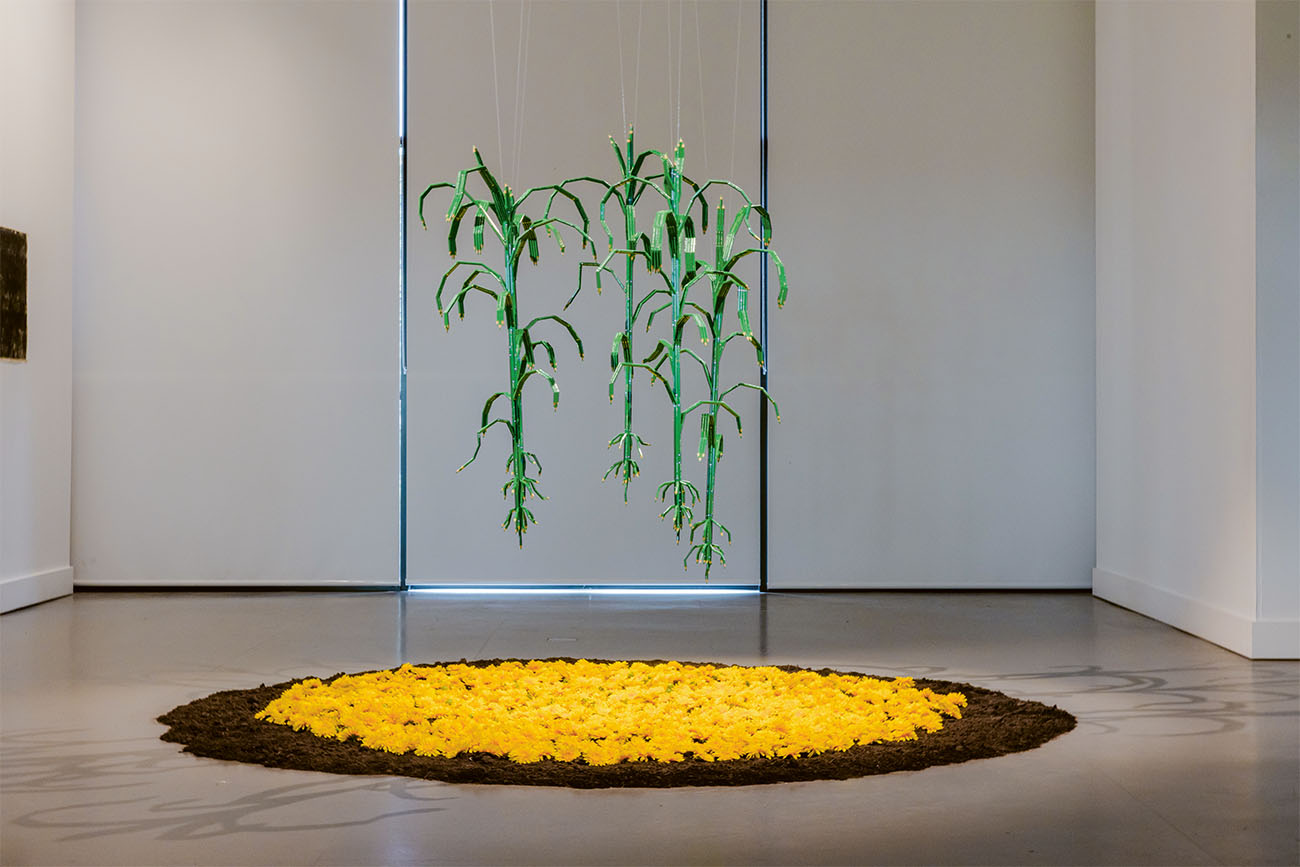
At Penrith Regional Gallery, a scent, earthly and sweet. Soil, piled, like an offering, around a circle of yellow flowers, a canopy of green pencils: Fernando Poyón’s Bringing Joy to the Earth (2025) in which the Guatemalan artist, who references milpas or corn stalks—reclaims Indigenous Kaqchikel knowledge, its attentiveness to cycles and seasons. 

We live in a world shaped by linear time, a construct of the West, its relentless march of progress, but at Penrith Regional Gallery, on the banks of the Dyarubbin, the Nepean River, where, out the back, behind the house once owned by the Australian modernist artists Gerland and Margo Lewers, the Yindjibarndi painter and elder Wendy Hubert, who travelled five thousand kilometres to arrive here, installed a garden that recreates four sacred sites in her Country, the Pilbara.

She also added, among the rocks and the dirt, a banana plant, its fronds evoking her childhood on a station at Red Hill, and the earth, a form of memory, a living composite of the past, present and future. And I’m moved, back in the first room, by the Indian Romanian artist Monica Rani Rudhar’s The fire in me was lit long ago (2026).

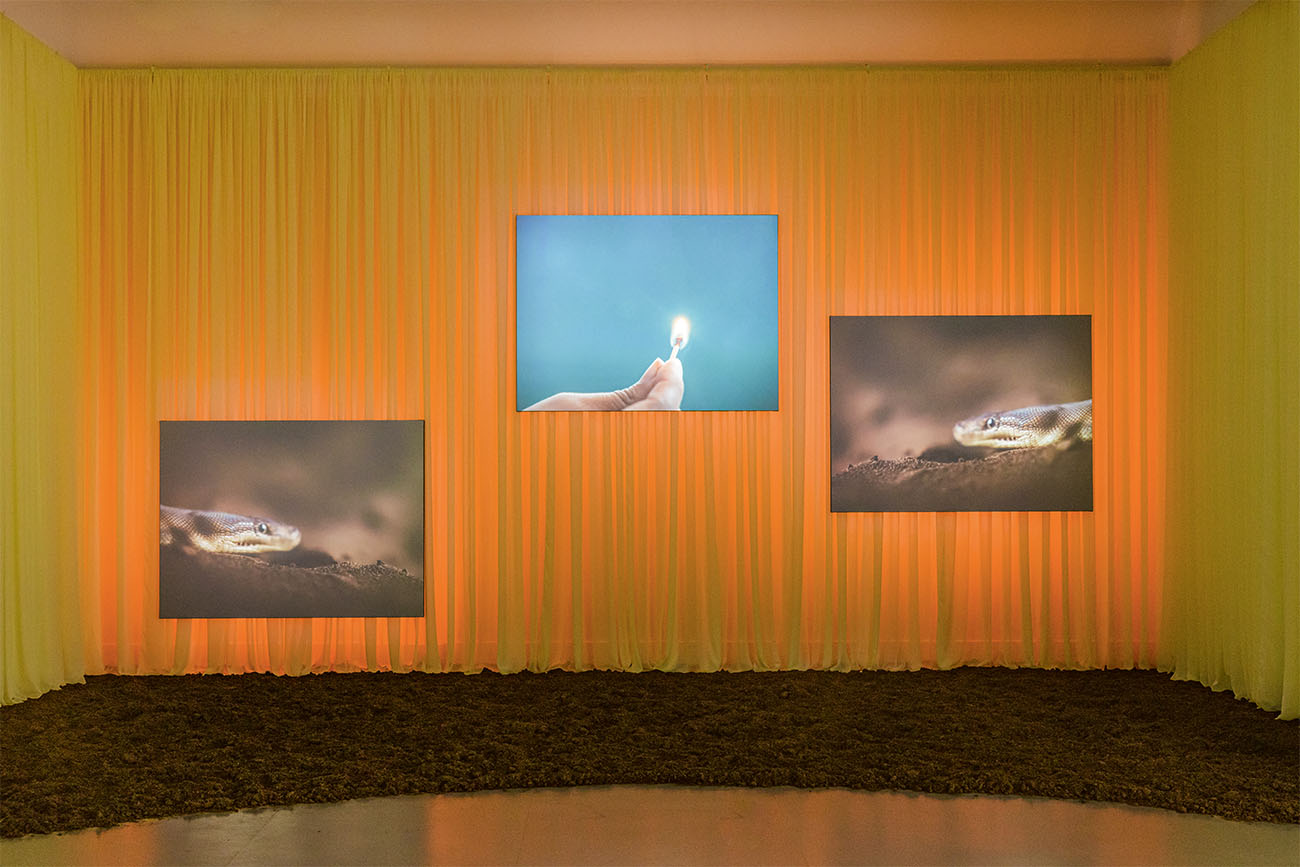
The video work tells the story of Rani Rudhar’s grandfather, Ram Parkash, who, working on a sugarcane plantation, fought for independence from the British in the 1940s Punjab via a glimmering sequence of images. An explosion of sparks through the air. A snake slithering on the ground. The artist, applying kohl, an ancient ritual that invokes earthly pigments, evokes the ways our bodies are inextricable from the world around us. 

She inhabits the frame, proud and defiant, daring the viewer to acknowledge her presence and by extension, the land she comes from, the place her ancestors fought to protect, the lineage that has enabled her, too.

3. Centre

Rememory brings together 83 artists from 37 countries. But the biennale, which sprawls across five sites, has no clear centre. On the bus with journalists and critics, the first day I see the show, we traverse great distances—the looping freeways and fleeting vistas that shape this wild and improbable city, a place of rivers and harbours and ocean. Here, stories and histories—the legacy of inhabitants from over 200 countries—unfold across a defining story and history, one of conquest and dispossession. It is hard, at first, to hold the whole biennale in my head. To draw connections between encounters that feel disparate. 

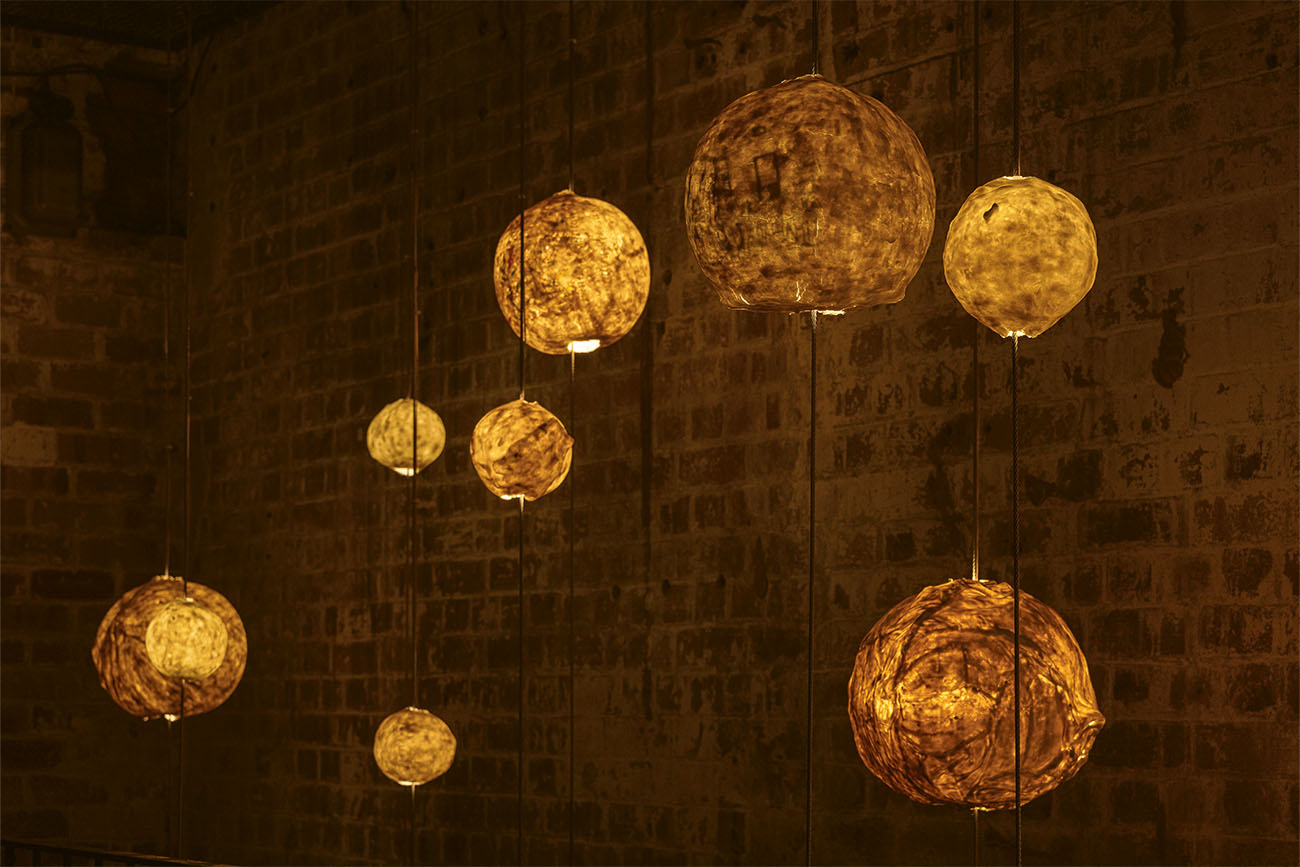
On the ground floor of the White Bay Power Station, where coal once fuelled Sydney’s electric grid, I’m mesmerised by a row of golden orbs that hang in a dark passageway. This is Somos Nosotros (2026), by Daisy Quezada Ureña: ceramic forms, made from garments donated by those caged and detained at the US-Mexican border, burned away during the firing process. 

I’m moved, at the Chau Chak Wing Museum, by the Tongan and Scottish artist Benjamin Work’s PĀPAAKI (2025), in which an arrangement of paki or dance paddles—made from tin cans and inlaid with whale bone—counters the actions of Thomas James McGrath, the Sydney convict and whaling captain who kidnapped 30 men from Niuafo‘ou, the artist’s grandmother’s island, selling them into the Peruvian slave trade. 

And again, at Sydney Modern, in front of This is My Silence, You Name the Sound (2025), a dreamlike series of collages by Nahom Teklehaimanot in which faces and torsos and limbs are suspended in the air. The artist, whose assemblages draw from magazines and archives, was deported, as a child, from Addis Ababa to Eritrea and the work, fragmentary and associative, conjures the free-floating condition of displacement—the sense of being untethered, not just from a place, but from the story itself. 

The biennale takes its name from an idea in Beloved, a 1987 novel by the great US writer Toni Morrison, in which Sethe, a formerly enslaved woman, is haunted by the baby she murdered to save her from life on Sweet Home, a Kentucky plantation. 

Thinking about the show, it strikes me with a start that the presentation—scattered and diffuse—enacts the patterns of memory. The difficulty of retrieving knowledges that are traumatic or long buried. 

The way, when you are written out of the official record, recollections of a complex or violent past refuse the terms of narrative, the logic of centre and margin. They challenge the viewer’s desire to know where we’re standing, upending our reality, shards of what we’ve submerged, rising to the surface, when we least expect.

Somos Nosotros, like many works at the White Bay Power Station, is obscured, the otherworldly spheres, inviting us to inhabit, too, the space of the border, a liminal zone between past and future, but the work’s ethereal glow also cloaks the bodies it refers to in quiet beauty, giving them—like the figures in Breeze’s Living Histories—a soft place to rest.

4. Bodies

There are controversies in the opening week of the biennale, calls for the exhibition to be more ‘inclusive,’ to better serve the public. The headlines keep coming. But, to me, this echoes the governing logic of this continent, one in which the centre dictates to the margins the terms of its inclusion. All the ways it is conditional. 

There’s a scene in Beloved, where a character called Paul D—who lived alongside Sethe at Sweet Home—touches a scar on her back. The intricate lines are etched on her skin, in the shape of a chokecherry tree, a corporeal reminder of past cruelties. So often, the struggle between history and memory plays out on the body. But the body—despite attempts to control or contain—can resist the stories imposed on it. It can imagine new ways to be. 

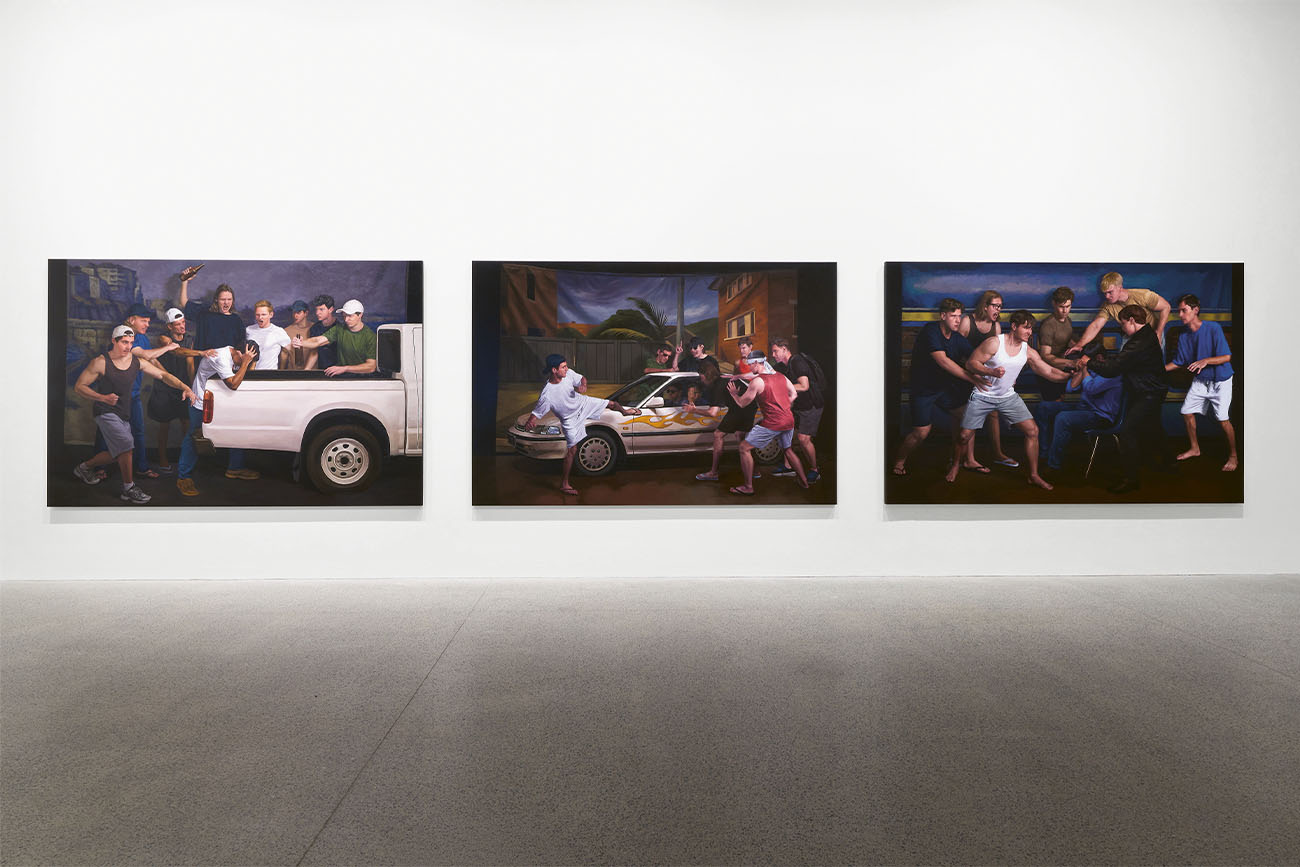
On the ground floor of Sydney Modern, alongside a display of bouquets, designed to wither and wilt by Canadian artist Kapwani Kiwanga—charting the transfer, from colonial rule, to independence, across the African continent, I am jolted by Abdul Abdullah’s paintings of the Cronulla Riots. Here, Abdullah, an artist with Malay-Indonesian and settler-convict ancestry, recreates one of the country’s defining examples of racial violence—an assault, in 2005, that saw 5000 mostly white Australians attack bodies of Middle Eastern appearance on Cronulla Beach, south of the city. 

In one work, a young man is poised to strike, a beer bottle in hand, while another cowers over a white ute, a symbol of Australian masculinity, and in another, a figure in white shorts is mid-kick, addressing a row of muscled opponents. Abdullah renders these scenes with all the acuity and gravitas of a Renaissance painting—the colours rich and vivid—pointing to the fact that these scenes, that we think of our past, are still fermenting in this culture, still shaping the psyche of a country in which those marked out as others are treated, always, as invaders and far-right politicians, such as Pauline Hanson, are rising again. 

The week I see the show, I watch an interview with Nikesha Breeze, who—meditating on Living Histories—talks about how gauze, the material of her work, originated in Gaza. 

I stand, floored, in front of the Ngurrara Canvas II, an extraordinary painting, made by 40 artists from the Great Sandy Desert, installed, opposite Teklehaimanot’s collages, on an eighty-square metre platform. Its lines and circles, swirling and intricate, recalling jila—or waterholes—that challenged the colonial legal system by asserting an ancestral connection to country.

I admire Code Black/Riot (2025), a photographic series at the Chau Chak Wing Museum and video work at the Campbelltown Arts Centre in which Hoda Afshar, Behrouz Boochani and Vernon Ah Kee centre the stories of Indigenous youth who have been incarcerated. The boys and girls in Afshar’s evocative portraits look at the viewer, but cover their faces, refusing our gaze, resisting this brutal system by insisting on their privacy and dignity. 

And in a darkened space at the Art Gallery of New South Wales, I am touched by an elegant sculpture by Taysir Batniji, rows of olive oil soap—part of a centuries-old Palestinian tradition—inscribed with the Arabic saying dawam el hal men al mohal’, or ‘no condition is permanent. The soap, ordinary and yet so intimate is part of the way we tend to ourselves, but in Rememory, the artist invites the audience, at regular intervals, to take a bar home with them and I think about how this hints at the fact of our shared humanity and how our bodies are continuous, depending on each other to heal.

Neha Kale